Mesa redonda “Desafíos actuales en la gobernanza migratoria: el rol del nivel local”
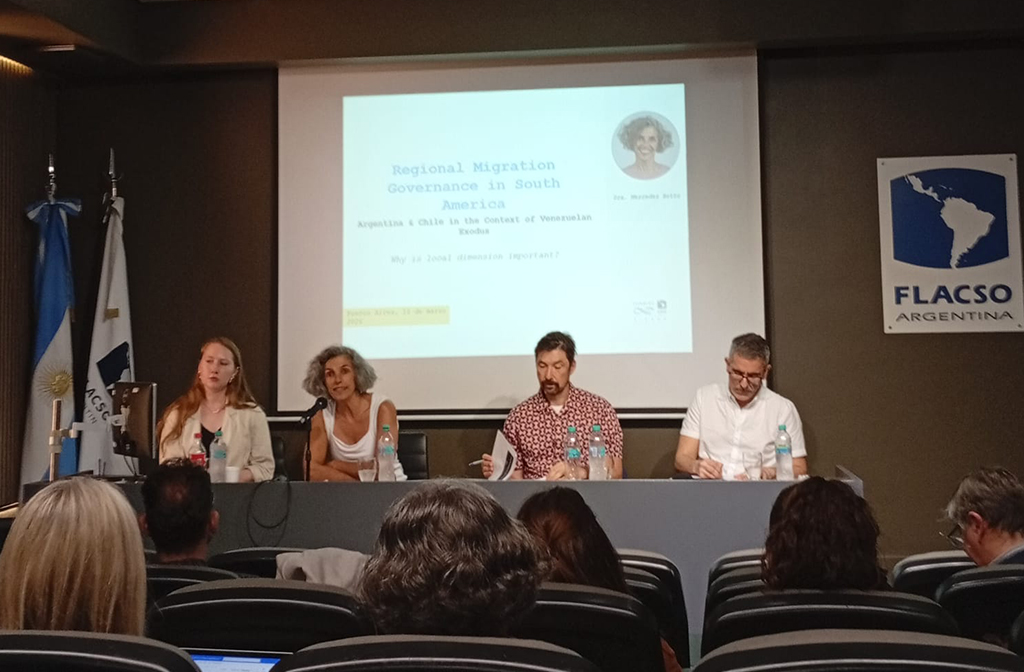
El pasado miércoles 18 de marzo se llevó a cabo la mesa redonda “Desafíos actuales en la gobernanza migratoria: el rol del nivel local” ―organizada por el IICSAL (FLACSO-CONICET) ― en el marco de la segunda reunión de la red doctoral LAC-EU en Buenos Aires. Participaron la Dra. Mercedes Botto, el Dr. Harald Bauder, el Dr. Juan Carlos Triviño-Salazar y la moderación estuvo a cargo de la becaria Alice Blukacz.
La red doctoral LAC-EU es una iniciativa financiada por la Comisión Europea a través de las Acciones Marie Skłodowska-Curie. La red está orientada a comprender las recientes transformaciones sociales, políticas y económicas en América Latina y el Caribe, y a contribuir a la renovación de las relaciones birregionales entre la Unión Europea y América Latina y el Caribe frente a los actuales desafíos globales. En este contexto, la segunda reunión de la red, organizada por FLACSO Argentina, reunió durante tres días a investigadores y doctorandos provenientes de más de 16 instituciones académicas de Europa y América Latina, quienes participaron en instancias de discusión, talleres temáticos y sesiones de seguimiento de los avances de investigación de los doce becarios del programa.
La mesa redonda contó con la participación de la directora del IICSAL (FLACSO-CONICET), Dra. Mercedes Botto; del Dr. Harald Bauder, profesor del Departamento de Geografía y Estudios Ambientales y del Programa de Posgrado en Estudios sobre Inmigración e Integración de Toronto Metropolitan University; y del Dr. Juan Carlos Triviño-Salazar, profesor asistente de Políticas Públicas en el Departamento de Ciencias Políticas y Sociales de la Universitat Pompeu Fabra. La actividad fue moderada por Alice Blukacz, becaria de la red LAC-EU e investigadora doctoral del IICSAL (FLACSO-CONICET) y de la Universitat Pompeu Fabra.
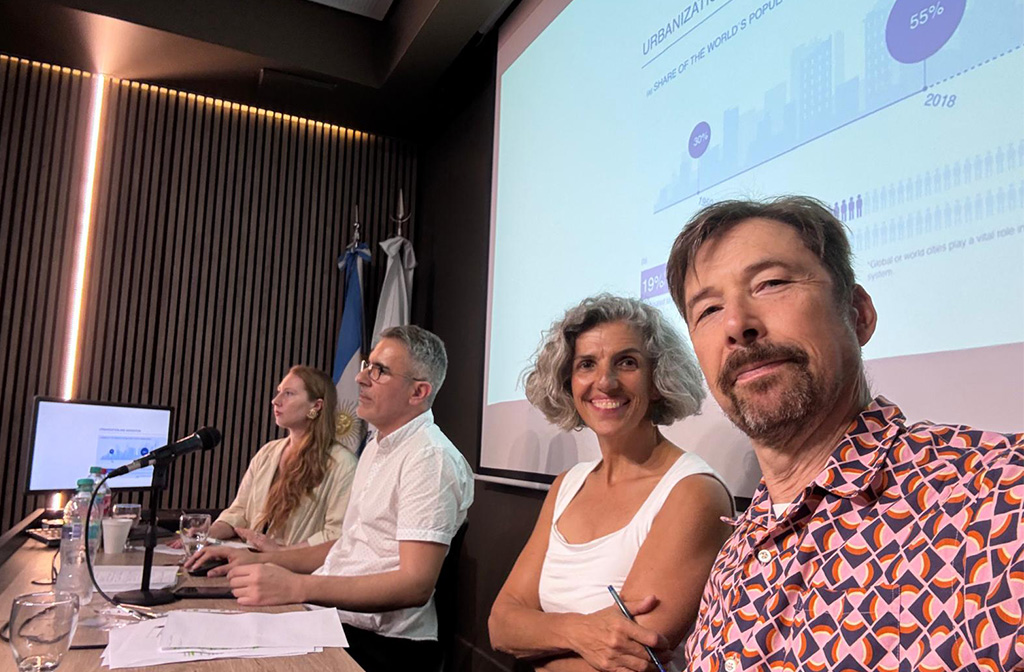
En el contexto de los desafíos contemporáneos de la gobernanza migratoria, el encuentro se centró en el rol de los gobiernos y actores locales en la garantía del acceso a derechos sociales y migratorios en ciudades con distintos contextos alrededor del mundo. En primer lugar, la Dra. Mercedes Botto presentó un análisis comparado de las experiencias de la Ciudad Autónoma de Buenos Aires y Santiago de Chile frente a los recientes flujos migratorios provenientes de Venezuela. A continuación, el Dr. Harald Bauder expuso el proyecto Soli*City, una iniciativa de investigación y desarrollo de políticas públicas orientada a estudiar y promover el concepto de ciudades solidarias a nivel global. Finalmente, el Dr. Juan Carlos Triviño-Salazar abordó el caso de Barcelona como ejemplo de políticas locales orientadas a fortalecer la inclusión de las personas migrantes.
Las intervenciones permitieron reflexionar sobre la importancia de los procesos de regularización migratoria para garantizar el acceso efectivo a derechos, así como sobre el papel central que desempeñan las instituciones y actores locales en la implementación de políticas de inclusión. Asimismo, se destacó la necesidad de fortalecer la articulación entre marcos institucionales, diseño de políticas públicas y mecanismos de implementación para promover la integración social de las personas migrantes en el ámbito local.
Esta actividad formó parte de las instancias de intercambio académico impulsadas por la red LAC-EU y del compromiso del IICSAL (FLACSO-CONICET) con la promoción del debate y la producción de conocimiento sobre los desafíos contemporáneos de la gobernanza migratoria a nivel regional y global.
Roundtable “Current Challenges in Migration Governance: The Role of the Local Level”
On Wednesday, March 18, the roundtable “Current Challenges in Migration Governance: The Role of the Local Level” was held, organized by IICSAL (FLACSO-CONICET) as part of the second meeting of the LAC-EU Doctoral Network in Buenos Aires.
The LAC-EU Doctoral Network is an initiative funded by the European Commission through its Marie Skłodowska-Curie Actions, and its aim is to provide a better understanding of recent transformations in LAC, contributing to update and renovate bi-regional relations between the EU and LAC, and to confront current global challenges. In this context, the second meeting of the network was hosted by FLACSO Argentina and brought together researchers and doctoral candidates from more than 16 academic institutions across Latin America and Europe for three days of discussions, thematic workshops, and progress review sessions of the twelve fellows’ research projects.
The roundtable featured the participation of the Director of IICSAL (FLACSO-CONICET), Dr. Mercedes Botto; Dr. Harald Bauder, Professor in the Department of Geography and Environmental Studies and the Graduate Program in Immigration and Integration Studies at Toronto Metropolitan University; and Dr. Juan Carlos Triviño-Salazar, Assistant Professor of Public Policy in the Department of Political and Social Sciences at Universitat Pompeu Fabra. The session was moderated by Alice Blukacz, LAC-EU fellow and doctoral researcher at IICSAL and Universitat Pompeu Fabra.
In the context of contemporary challenges in migration governance, the discussion focused on the role of local governments and institutions in ensuring access to social and migration-related rights in cities in different contexts around the world. First, Dr. Mercedes Botto presented a comparative analysis of the experiences of the City of Buenos Aires and Santiago de Chile in responding to recent migration flows from Venezuela. Dr. Harald Bauder then introduced the Soli*City project, a research and public policy initiative aimed at researching and promoting the concept of solidarity cities worldwide. Finally, Dr. Juan Carlos Triviño-Salazar discussed the case of Barcelona as an example of local policies designed to strengthen the inclusion of migrants.
The presentations highlighted the importance of migration regularization processes in ensuring effective access to rights, as well as the central role played by local institutions and actors in the implementation of inclusive policies. The discussion also emphasized the need to strengthen the interaction between institutional frameworks, public policy design, and implementation mechanisms in order to promote the social integration of migrants at the local level.
This activity formed part of the academic exchange initiatives promoted by the LAC-EU network and reflects IICSAL (FLACSO-CONICET)’s commitment to fostering debate and knowledge production on the contemporary challenges of migration governance at the regional and global levels.
Instituto de Investigaciones Sociales de América Latina
Correo electrónico: iicsal@flacso.org.ar
(+ 54 11) 5238-9300 – Interno: 441
Tucumán 1966 (C1050AAN)
Ciudad Autónoma de Buenos Aires, Argentina.
Seguinos en nuestras redes: ![]() @iicsal |
@iicsal | ![]() @IICSALFLACSO-CONICET
@IICSALFLACSO-CONICET
Suscripción al Newsletter IICSAL: https://bit.ly/newsletter-iicsal