
New Cohort of the Global Studies Programme
Start of Cohort 18 of the Global Studies Programme at FLACSO Argentina
As part of the start of the second academic term of 2026, the Argentine campus of FLACSO welcomed a new cohort of students to the Master’s in Global Studies (Global Studies Programme – GSP), the 18th in Argentina and at this headquarters. This international postgraduate program is offered jointly with the University of Freiburg and Humboldt University of Berlin (Germany), alongside a global network of partner institutions.
In this edition, the program features local coordination by Dr. Pía Marchegiani, a researcher, lecturer, and a student of the GSP itself, who takes on the leadership of this stage of the academic track.
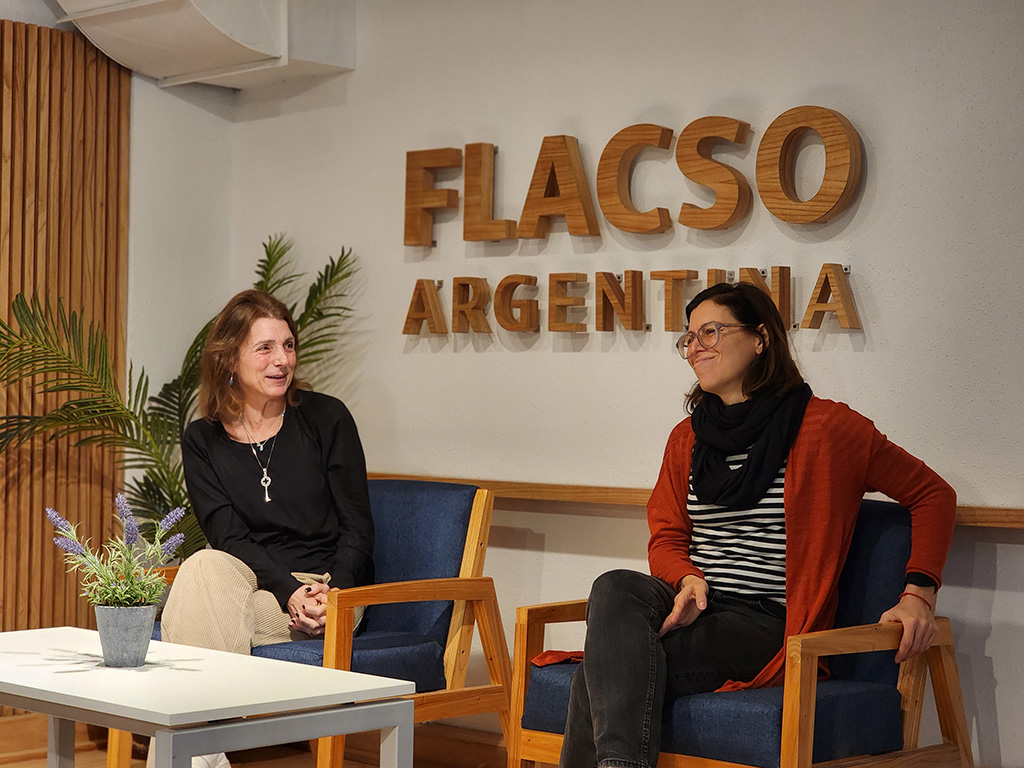
The 2026 cohort is made up of a diverse group of students from various countries, including Germany, the United States, the United Kingdom, Switzerland, the Netherlands, Spain, Turkey, Kazakhstan, Zimbabwe, Sierra Leone, Brazil, Bolivia, and Argentina. During their stay at FLACSO Argentina, students take four core courses: Methodology and Research Project Design, Global Economy and Culture Capture, Global Public Sphere, and Culture and Identity in Latin America. In turn, local students enrolled in the Global Studies Certificate mode join the classroom, allowing them to take the semester alongside this international group.
The incoming students’ undergraduate backgrounds reflect a markedly interdisciplinary profile, with training in Political Science, Sociology, Social and Cultural Anthropology, International Relations, Philosophy, History and Genocide Studies, Media Economics and Journalism, Geography, International Business, Communication Sciences, Film and Animation Design, and Business Engineering, as well as professionals from Medicine and Law.
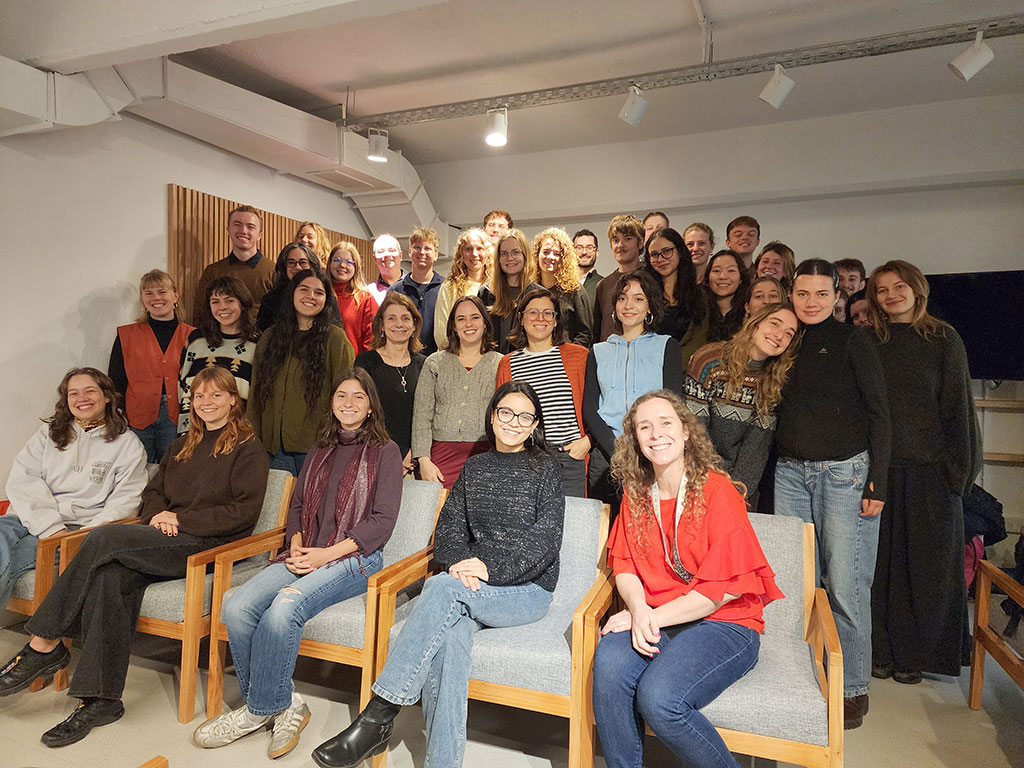
The faculty teaching the courses and methodological workshops includes Pía Marchegiani, Alejandro Pelfini, Juan Francisco Martínez Pería, Ana López Molina, María Eugenia Funes, María Victoria Mutti, Gabriel Levita, and Mercedes Máspero, with the collaboration of Carmín Ríos (former GSP 2024 student), Davide Rizzardi, Delfina Vila Moret, and Ariel Slipak.
The GSP is structured around an international Master’s degree involving six universities across different continents: the University of Freiburg and Humboldt University of Berlin (Germany); the University of Cape Town (South Africa), Jawaharlal Nehru University in New Delhi (India), Chulalongkorn University in Bangkok (Thailand), and FLACSO (Argentina Campus). The program also encompasses various research initiatives and publications on contemporary global issues, focusing on the profound changes in the world system and in societies worldwide, as well as the challenges they present for the social sciences and public debate.
Mobility among its various locations and the plurality of nationalities and cultures making up each cohort ensure that, within this Program, globalization is much more than an object of study: it is a lived experience. In this spirit, FLACSO Argentina encourages students to visit key sites of significance to Argentine history and culture, as well as to explore the city in search of its distinct characteristics.
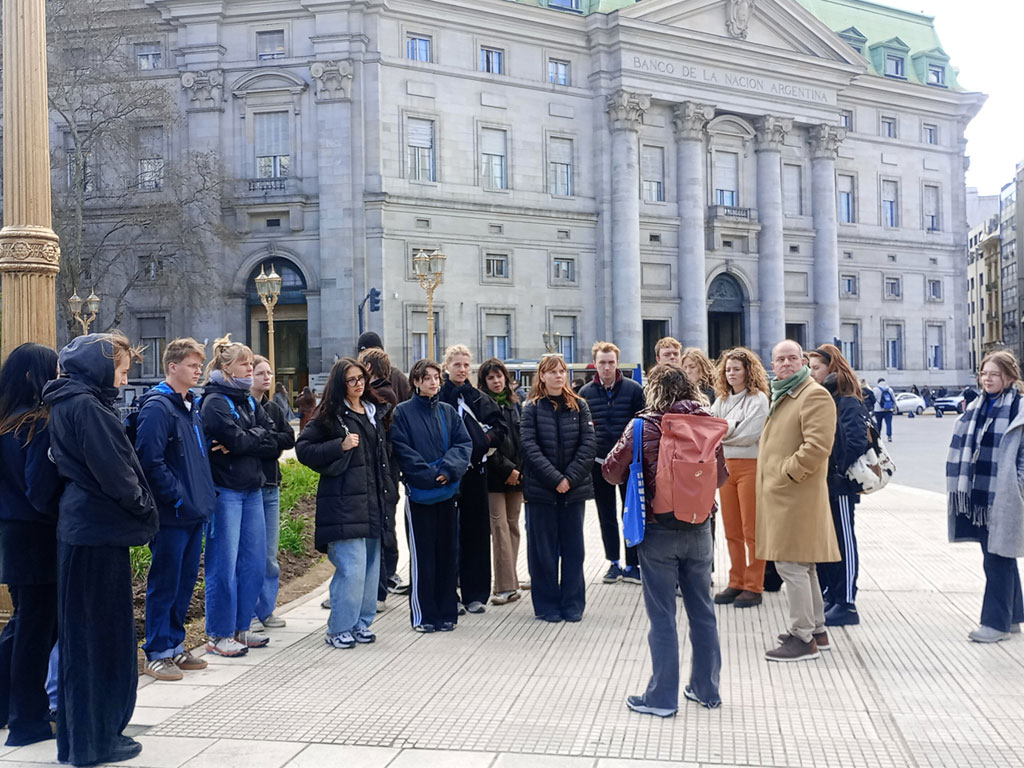
As part of the GSP program’s Latin American module, FLACSO contributes to reflecting on a time of major transformations that are occurring rapidly and amid high uncertainty. The academic proposal seeks to understand the trends and nuances of a specific moment in globalization characterized by logics of “relocation” and “reindustrialization” (onshoring, reshoring) within the Global North and their impacts on the region, as well as the implications of weakening multilateralism and the emergence of unilateral and bilateral proposals for common issues that require stronger cooperation.
War, conflicts, and the return of security discourses on a global scale mirror dynamics in a region where right-wing and far-right governments propose economic and human rights deregulation while strengthening surveillance within their domestic agendas. Globally, environmental protection is deprioritized and disconnected in a time of triple planetary crisis, while new industries such as AI are embraced without adequate discussion of their challenges, opportunities, and regional impacts.
The Latin American module aims to outline a critical analysis of current challenges facing the countries of the region.
Contact
For inquiries to the Latin American module coordination at FLACSO Argentina, please write to gsp@flacso.org.ar